




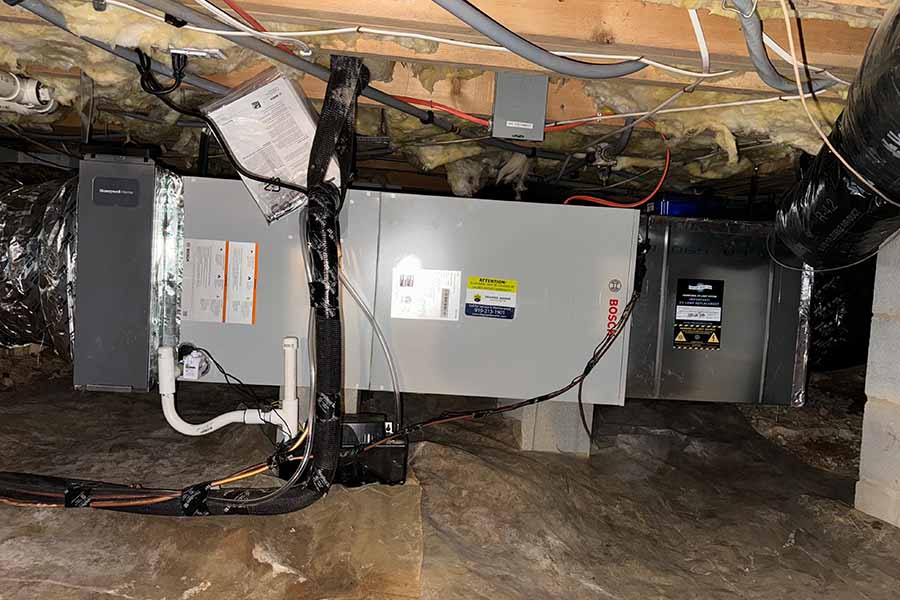
Your HVAC system is one of those things you don’t think about much until something goes wrong. And by the time it’s obvious something is wrong, the problem has usually been building for a while. The good news is that your system almost always gives you warning signs before it completely breaks down. Knowing what to look for can save you from a full system failure, an expensive emergency call, or a miserable week without heating or cooling in Cary’s unpredictable climate.
Here are six signs your HVAC system may need immediate attention.
1. Your System Is Blowing Warm Air When It Should Be Cooling
This one is hard to ignore, especially during a Cary summer. If your air conditioner is running but the air coming through your vents is warm or barely cool, something is off. It could be a refrigerant leak, a failing compressor, or a problem with your thermostat. None of these are issues you want to sit on.
Warm air from a running AC unit is one of the clearest signs that your system needs a professional eye as soon as possible. The longer you wait, the harder the system works and the worse the damage can get.
2. You Hear Unusual Noises Coming From Your Unit
A properly functioning HVAC system should run relatively quietly. If you start hearing sounds that weren’t there before, pay attention. Different noises point to different problems.
Banging or Clanking
This usually means something is loose or broken inside the unit, like a connecting rod, piston, or blower wheel. These kinds of mechanical problems tend to get worse fast.
Squealing or Screeching
A high-pitched squeal often points to a worn belt or a motor bearing that’s failing. It’s unpleasant to hear for good reason. It means something is under stress.
Hissing or Bubbling
These sounds can indicate a refrigerant leak. Refrigerant is what allows your system to cool your home, and a leak affects both performance and air quality.
Any sound that’s new, loud, or persistent is worth having a technician look at. Ignoring it rarely makes the problem go away.
3. Your Energy Bills Have Spiked Without Explanation
If your monthly energy bill jumps significantly and your usage habits haven’t changed, your HVAC system could be the reason. An inefficient system works harder than it should to maintain the temperature you’ve set, and that extra effort shows up on your bill.
This kind of hidden inefficiency is easy to overlook because the system still seems to be working. But running harder than necessary puts extra wear on components and often signals an underlying issue that will eventually turn into a breakdown. If your bills are climbing without a clear reason, it’s worth scheduling a professional inspection.
4. There Are Weak or Uneven Airflow Issues Throughout Your Home
Walk through your home and hold your hand up to a few different vents. Are some rooms getting strong airflow while others barely feel anything? Uneven airflow is a sign that something in your system is not working the way it should.
The cause could be a clogged air filter, a blocked duct, a failing blower motor, or something more serious. What matters is that uneven airflow means your system is struggling to do its job. Some rooms will be uncomfortable, your equipment will be under extra strain, and your energy efficiency will drop.
Don’t assume it’s just a filter issue and move on. If changing the filter doesn’t fix it, call a technician.
5. You Notice Moisture, Leaks, or Ice Around Your Unit
Some moisture around an HVAC system is normal under certain conditions, but standing water, active leaks, or ice buildup are not. These are red flags.
Water Leaks
A refrigerant leak can cause ice to form on the evaporator coil, which then melts and drips. A clogged condensate drain line can also cause water to back up and leak into your home. Either way, water where it doesn’t belong can damage your home and your equipment.
Ice on the Coil or Refrigerant Lines
If you can see ice forming on your outdoor unit or on the copper lines running to it, shut the system off and call for help. Running an iced-over system can cause serious damage to the compressor, which is one of the most expensive components to replace.
6. Your System Is Short-Cycling or Running Constantly
Short-cycling is when your HVAC system turns on, runs for a very short time, and then shuts off before fully completing a cooling or heating cycle. It then starts again shortly after. This repeated on-off pattern is hard on your equipment and means your home is never really reaching a comfortable, stable temperature.
On the flip side, a system that runs constantly without ever shutting off is also a problem. Both extremes suggest something is wrong, whether it’s an oversized or undersized system, a refrigerant issue, a failing thermostat, or a compressor problem.
Short-cycling and constant running both put serious stress on your system and can shorten its lifespan significantly if left unaddressed.
What to Do When You Spot These Signs
If you’re seeing one or more of these warning signs, the right move is to stop waiting and call a professional. Trying to push through with a struggling system usually leads to bigger repairs and higher costs down the road.
Staying on top of HVAC repair before a small problem turns into a full breakdown is always the smarter and more affordable path. And if your system has been acting up repeatedly, it may also be worth asking your technician whether a repair still makes sense or whether AC installation & replacement is the more cost-effective option long-term.

Conclusion
Your HVAC system will usually tell you when something is wrong. The key is knowing what to listen and look for, and taking action before a warning sign becomes a breakdown. In Cary’s climate, where your system works hard through both hot summers and cold winters, staying ahead of problems is not just smart, it’s necessary.
When you notice any of these signs, don’t wait. Degree Above Heating & AC Repair is ready to help you diagnose the problem quickly and get your system back to running the way it should. Call us today or book your appointment online.